Weather is one of football’s most underestimated factors. Long before the referee blows the opening whistle, temperature, humidity, wind, rain and altitude can influence how players move, recover and make decisions.
These conditions affect more than comfort. They can change the speed of the ball, the quality of the playing surface, the intensity of pressing and the number of high-speed runs a team can sustain. For bettors and analysts studying football match predictions, understanding the weather can reveal details that basic form statistics may miss.
Heat Reduces Physical Output
High temperatures place additional pressure on the body. As the environment becomes hotter, the body sends more blood towards the skin to release heat. This leaves less blood available to support working muscles and can make intense efforts feel more difficult.
Heat also increases sweating and fluid loss. Losing more than 2% of body mass through dehydration can affect sprinting, dribbling and other football-specific actions. Research has also found that high heat can reduce the distance players cover and limit high-intensity activity, particularly during the second half.
This is why hot matches often begin at a controlled pace. Teams may avoid constant pressing early in the game so they can preserve energy for decisive moments later.
Heat can affect:
- Sprint frequency.
- Recovery between high-intensity efforts.
- Concentration and decision-making.
- Passing accuracy late in matches.
- The effectiveness of pressing systems.
- The risk of cramps and heat-related illness.
A squad that is not properly prepared may look competitive during the opening period but lose sharpness as the match progresses.
Hydration and Heat Management
Professional teams now treat hydration as part of tactical preparation. Players may undergo sweat-rate testing so coaches and medical staff can design individual fluid plans.
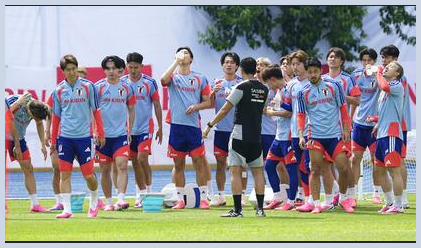
Training sessions are often moved to cooler periods, such as early morning or evening. Some teams also use cooling vests, cold drinks, shaded recovery areas and additional breaks when conditions become severe.
Heat acclimatisation is another important part of preparation. Sports science recommendations generally support repeated exposure to hot conditions over one to two weeks, allowing the body to improve its ability to regulate temperature and maintain performance.
However, acclimatisation does not remove all risks. High humidity can make hot conditions even more difficult because sweat evaporates less efficiently.
Humidity Slows Recovery
Humidity determines how effectively sweat can evaporate from the skin. When the air already contains a high amount of moisture, sweat remains on the body instead of cooling it efficiently.
This means a player may experience greater heat strain even when the thermometer does not show an extreme temperature. The heart must work harder to circulate blood between the skin and the muscles, while recovery between sprints becomes slower.
In a humid match, coaches may:
- Reduce the amount of continuous high-intensity pressing.
- Use more frequent substitutions.
- Encourage shorter passing sequences.
- Increase recovery periods during training.
- Focus on maintaining possession instead of forcing repeated transitions.
Humidity is especially important for teams travelling to tropical locations. Visitors may struggle to match the intensity of a home side that is already accustomed to the local climate.
Cold Weather and Muscle Readiness
Cold conditions create a different set of problems. When temperatures fall, muscles and connective tissues become less responsive. Players may take longer to reach their ideal operating temperature, increasing the risk of strains and other soft-tissue injuries.
A standard warm-up may not be enough in freezing conditions. Teams often extend their preparation and use more dynamic movements to raise muscle temperature before kick-off.
Important cold-weather football training measures include:
- Longer dynamic warm-ups.
- Thermal clothing during pre-match preparations.
- Regular movement during stoppages.
- Heated benches or indoor recovery areas.
- Immediate reactivation exercises after half-time.
Half-time can be particularly challenging. Players who remain stationary in a cold tunnel or dressing room may cool down quickly. If they return to the pitch without a proper second warm-up, their muscles may not be ready for sudden acceleration.
Wind Changes Ball Control
Strong wind can affect nearly every technical aspect of a match. A gust can alter the path of a cross, free kick or long pass, while goalkeepers must constantly judge how the ball will behave in the air.
When wind speeds become significant, teams often adjust their approach by:
- Keeping the ball on the ground.
- Reducing risky cross-field passes.
- Playing shorter combinations.
- Avoiding unnecessary aerial duels.
- Positioning defenders deeper against strong gusts.
Goalkeepers may also prefer short throws or passes instead of long kicks that could be carried away or lose accuracy.
Wind direction can change during the match, creating another layer of uncertainty. A strategy that works during the first half may become ineffective if the breeze shifts. Teams that train in changeable conditions are usually better prepared to adapt.
For football betting analysis, strong wind can be relevant when assessing markets such as total goals, corners and correct scores. However, wind should be considered alongside team style, pitch quality and the importance of the fixture.
Rain Affects the Pitch and Ball Speed
Rain can transform a pitch within minutes. A wet surface often makes the ball travel faster along the ground, reducing the time defenders have to react.
This may benefit teams that move the ball quickly and attack directly. However, it can also create problems for players who rely on close control. A pass with normal weight can travel too far, while a poor touch may give opponents an immediate chance.
Heavy rain also affects traction. Players may struggle to stop, change direction or accelerate, particularly on soft grass or clay-heavy surfaces.
Coaches and equipment staff may prepare different boot options depending on the forecast. Longer or wider studs can provide improved grip on saturated ground, while shorter studs may be better suited to firm, wet artificial surfaces.
Rain can lead to:
- More defensive errors.
- Faster ground passes.
- Slippery tackles.
- Difficult goalkeeping conditions.
- Increased set-piece danger.
- More stoppages and fouls.
The most adaptable teams are usually those that change their passing speed and movement patterns instead of trying to play exactly as they would in dry conditions.
Weather Shapes Tactical Plans
Weather does not affect every team equally. A possession-based side may struggle on a wet, fast pitch if its players cannot control the ball. A counter-attacking team may benefit from defensive mistakes caused by slippery conditions.
Heat can make an aggressive press difficult to sustain, while strong wind may reduce the value of long passes. Cold temperatures may make early injuries more likely, and heavy rain can increase the importance of set pieces.
Coaches therefore study weather forecasts alongside opponent analysis. Training may be adjusted to reproduce expected conditions, while match plans are designed around energy use, ball control and recovery time.
For those following football pools predictions, weather is a useful supporting factor. It should not replace form, injuries, team news or tactical analysis, but it can help explain why a favourite may struggle or why a match could produce fewer goals than expected.
Seasonal Training Adjustments
Training loads also change throughout the season. Clubs working in hot climates may schedule demanding sessions during cooler periods, while teams in cold regions may spend more time preparing indoors or extending warm-ups.
Modern performance departments use detailed environmental information instead of relying only on the air temperature. They may monitor humidity, wind speed, solar radiation and wet-bulb globe temperature to estimate the actual strain placed on players.
This allows coaches to make informed decisions about:
- Session length.
- Sprint volume.
- Recovery intervals.
- Hydration breaks.
- Substitute use.
- Travel and arrival times.
- Training intensity before matches.
Long-term planning is essential because weather stress can accumulate over several days. A player may cope with one hot session but struggle if another demanding session follows without adequate recovery.
Conclusion
Weather is not a minor detail in football. Heat, humidity, cold, wind, rain and altitude can influence physical output, technical execution, tactical decisions and injury risk.
Teams that prepare properly can reduce the negative effects through acclimatisation, hydration, suitable equipment, adjusted training schedules and flexible tactics. For analysts, weather provides another useful layer when evaluating football match predictions and football betting tips.
The conditions do not decide every result, but they can shape how the match is played. In closely matched fixtures, that influence may be enough to determine which team finishes stronger.