For many football fans, checking Premier League live scores used to mean looking at one thing: the score. If Arsenal were winning 1-0, Manchester United was drawing 1-1 or Liverpool were losing, that was usually enough information to understand what was happening.
Today, it is rarely that simple.
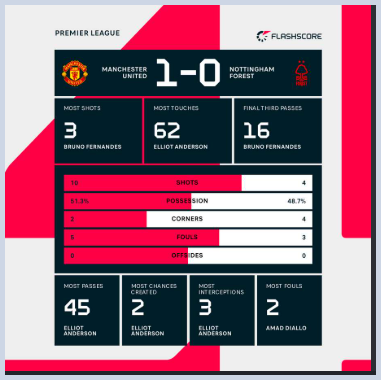
When I follow a Premier League match, I want to know more than who has scored. I look at the shots, possession, attacking pressure, chances created and other live statistics that help explain why the game is developing in a particular way. A team can be ahead without being the better side, while a team trailing by a goal can be creating the greater threat.
That is why real-time football statistics have become such a useful part of following matches in 2026.
What Does Premier League Live Scores Mean?
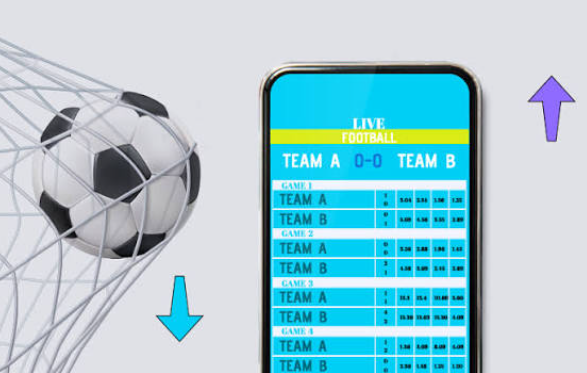
Premier League live scores provide minute-by-minute updates from matches as they happen. Alongside the score and match clock, many live-score services provide information such as goals, yellow and red cards, substitutions, shots, possession and other match events.
For me, the real value comes from combining these details rather than looking at the score in isolation.
A 1-0 scoreline tells me who is ahead. The statistics can give me a better idea of how that team reached the position and whether it is actually controlling the game.
Live Scores Show How a Match Is Developing
One of the biggest changes in modern football analysis is the amount of information available during a match. Imagine a team scores after 10 minutes and then spends most of the remaining time defending. The scoreboard still says 1-0, but the match itself may have changed completely.
The opposition might be enjoying most of the possession, producing several shots and repeatedly entering dangerous areas. In that situation, simply seeing the score could give me a misleading impression of the game.
This is where live match analysis becomes useful. Instead of asking only who is winning, I can ask which team is creating the better opportunities and applying the most pressure.
Attacking Statistics Can Reveal Hidden Pressure
When I check live football scores, attacking numbers are among the first statistics I examine.
Shots and shots on target can provide an indication of how frequently teams are testing each other's defences. However, the location and quality of those attempts also matter.
For example, six shots from outside the penalty area may not represent the same level of danger as three well-created opportunities inside the box.
This is where Expected Goals (xG) can add another layer to the analysis. xG is designed to estimate the likelihood of a particular chance resulting in a goal, based on factors surrounding the opportunity.
It does not predict exactly what will happen, but it can help explain whether a team's attacking numbers represent genuine danger or simply a high volume of low-quality attempts.
Possession Does Not Always Tell the Whole Story
I have watched plenty of matches where one team dominates possession but struggles to create clear chances.
A side can have 65% of the ball and still find itself under greater threat because the opponent is defending compactly and breaking quickly.
That is why I prefer to look beyond Premier League possession statistics. Key passes, passes into dangerous areas, crosses, shots inside the box and counter-attacking opportunities can provide more context.
When several of these numbers point in the same direction, the picture becomes clearer. A team with less possession but repeated dangerous attacks may actually be producing the more meaningful football.
Individual Players Can Change the Numbers
Football is still decided by players, and one individual can change the direction of a match.
A winger repeatedly beating his defender can create a series of dangerous attacks. A midfielder winning second balls can keep his team on the front foot. Meanwhile, a striker constantly finding space in the penalty area can become a major threat even before scoring.
That is why player performance statistics are worth watching alongside live scores.
Substitutions can be particularly important. A manager introducing a quick attacker in the second half may immediately change the team's approach. Likewise, an early yellow card for a defender can influence how aggressively that player challenges opponents. These small developments can help explain changes in the rhythm of a match.
Common Mistakes When Following Live Scores
The biggest mistake is assuming that the scoreline tells the complete story.
Another is ignoring the match clock. A statistic recorded in the first half may have a completely different meaning late in the second half.
I also avoid placing too much importance on one number. Possession alone is not enough. Shots alone are not enough. Even xG needs context. The strongest approach is to combine live football results, match statistics, team performance and what is happening on the pitch.
Look Beyond the Scoreboard
For me, the biggest advantage of Premier League live scores is that they turn a simple result into a running story. The score tells me what has happened. The statistics help me understand why it happened and what the match may be looking like at that particular moment.
Whether I am following a big Premier League clash, checking the latest football results or simply trying to understand a team's performance, live statistics provide a much richer picture than the scoreboard alone.
Ultimately, no statistic can remove the uncertainty that makes football exciting. But when Premier League live scores, attacking data, player performance and match context are considered together, following a game becomes more informative, engaging and easier to understand.